From rail tracks to the highest terrace in Paris
Rising above the Left Bank, Tour Montparnasse tells a very modern chapter of Parisian history while offering a view that stretches across centuries.
Table of Contents
From old rail yards to a new skyline
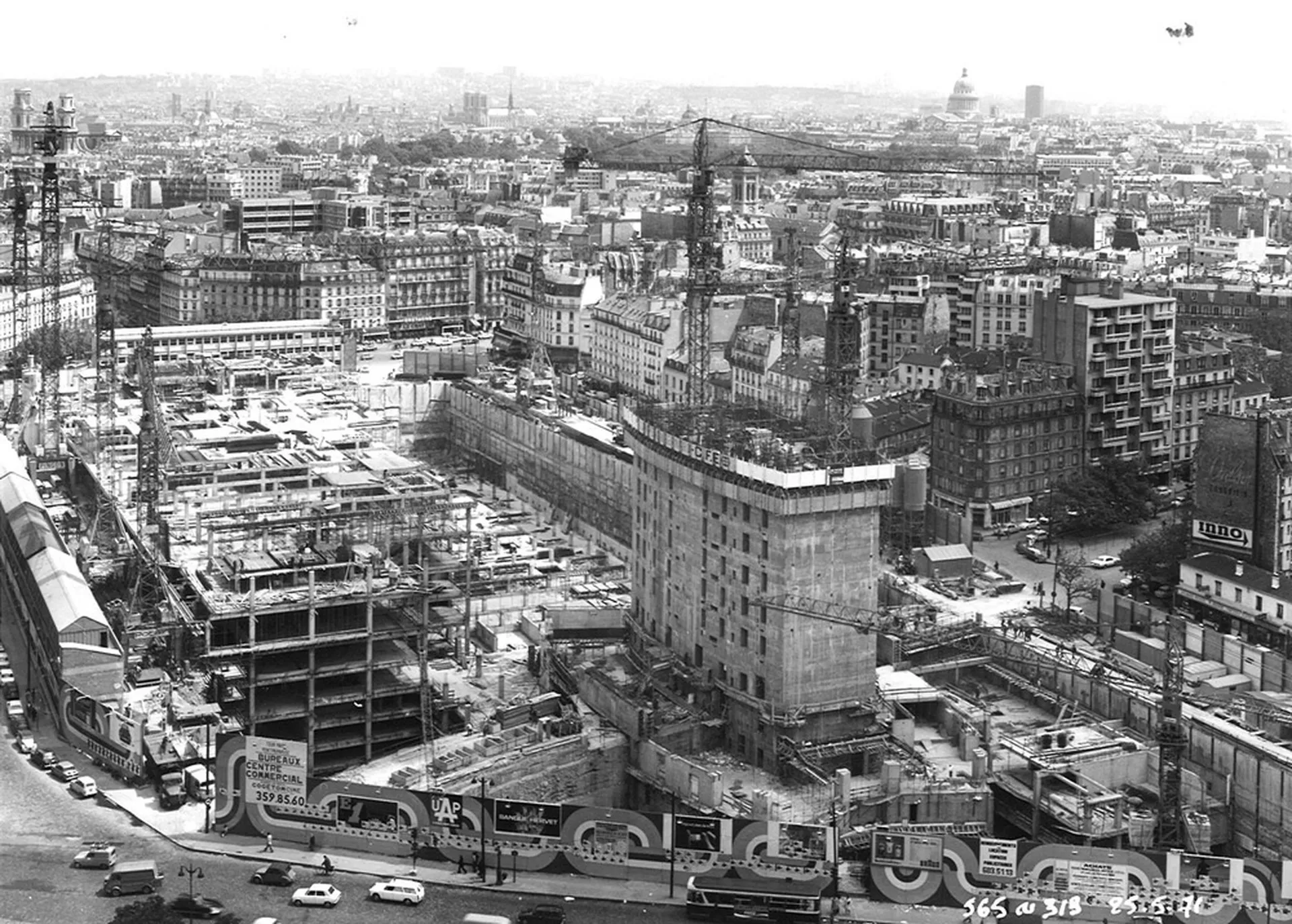
Long before lifts whisked visitors to the top, the ground beneath Tour Montparnasse was a busy world of tracks, warehouses, and steam. For decades, Gare Montparnasse was one of the city’s great railway gateways, its surrounding yards filled with carriages and locomotives that linked Paris to the west of France and the Atlantic coast. After the Second World War, as rail transport evolved and the city grew, planners began to imagine something radically different for this area: a new business district and modern landmark that would signal a confident, forward‑looking capital.
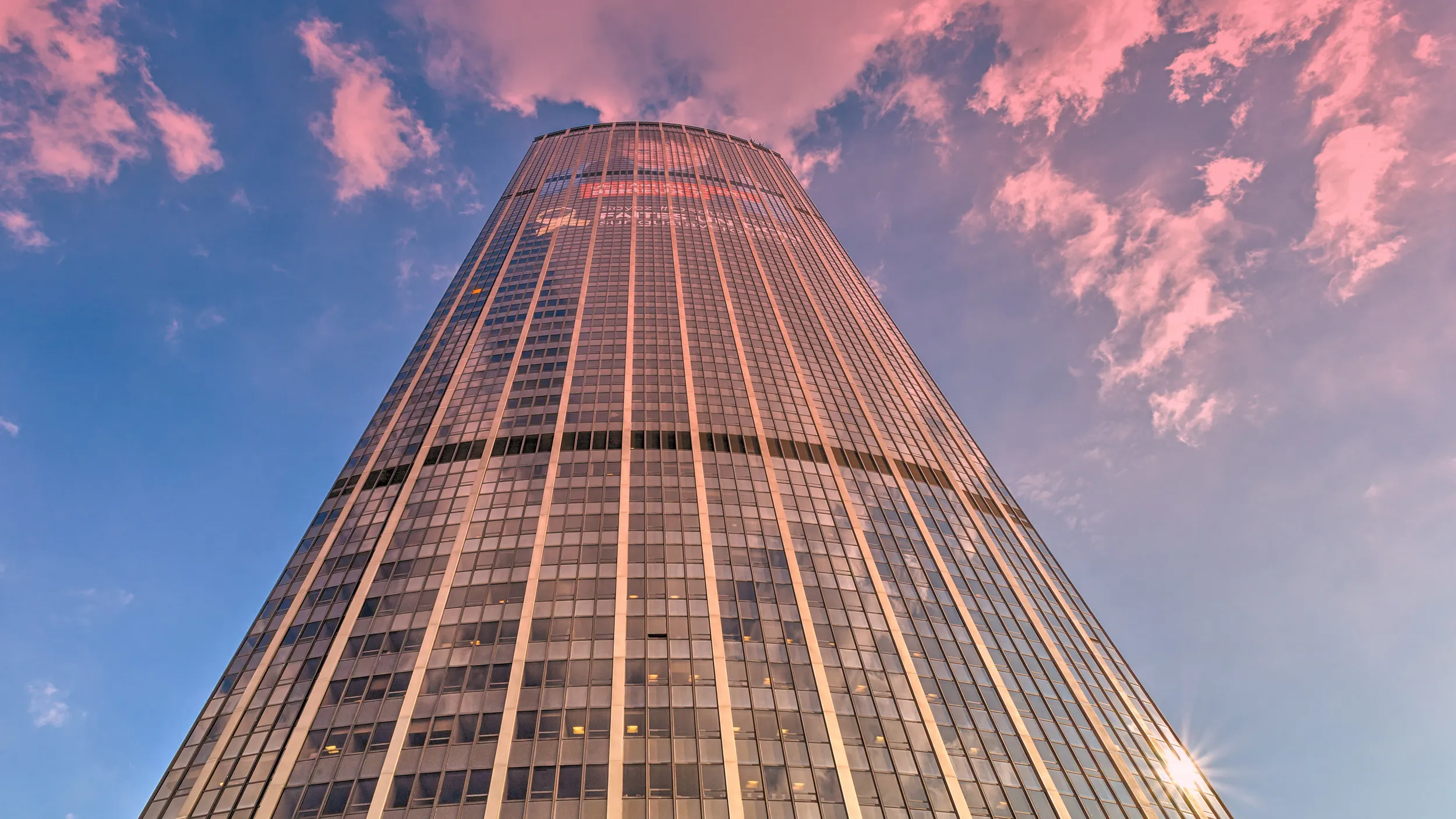
In the 1960s and early 1970s, that vision took shape in the form of a dark, minimalist tower rising 210 meters above the Left Bank. At the time it was completed, Tour Montparnasse was the tallest skyscraper in France, and one of the tallest in Europe. For Parisians used to church spires and low stone buildings, its silhouette marked a dramatic change. Today, when you stand on its viewing platforms, you can still sense that break with the past: the tower stands alone, slightly apart, giving you the feeling of being at the edge of the old city and the beginning of something new.
Designing and building Tour Montparnasse
The idea of building a skyscraper above a major railway hub was ambitious. Architects and engineers had to reconcile two worlds: the invisible complexity of tracks and platforms below, and the desire for a sleek, vertical landmark above. Construction began in the late 1960s, with teams working to create deep foundations around live rail lines while traffic continued to flow in and out of Gare Montparnasse. In 1973, the tower opened, its reflective glass façade and dark metal frame instantly recognizable from many parts of the city.
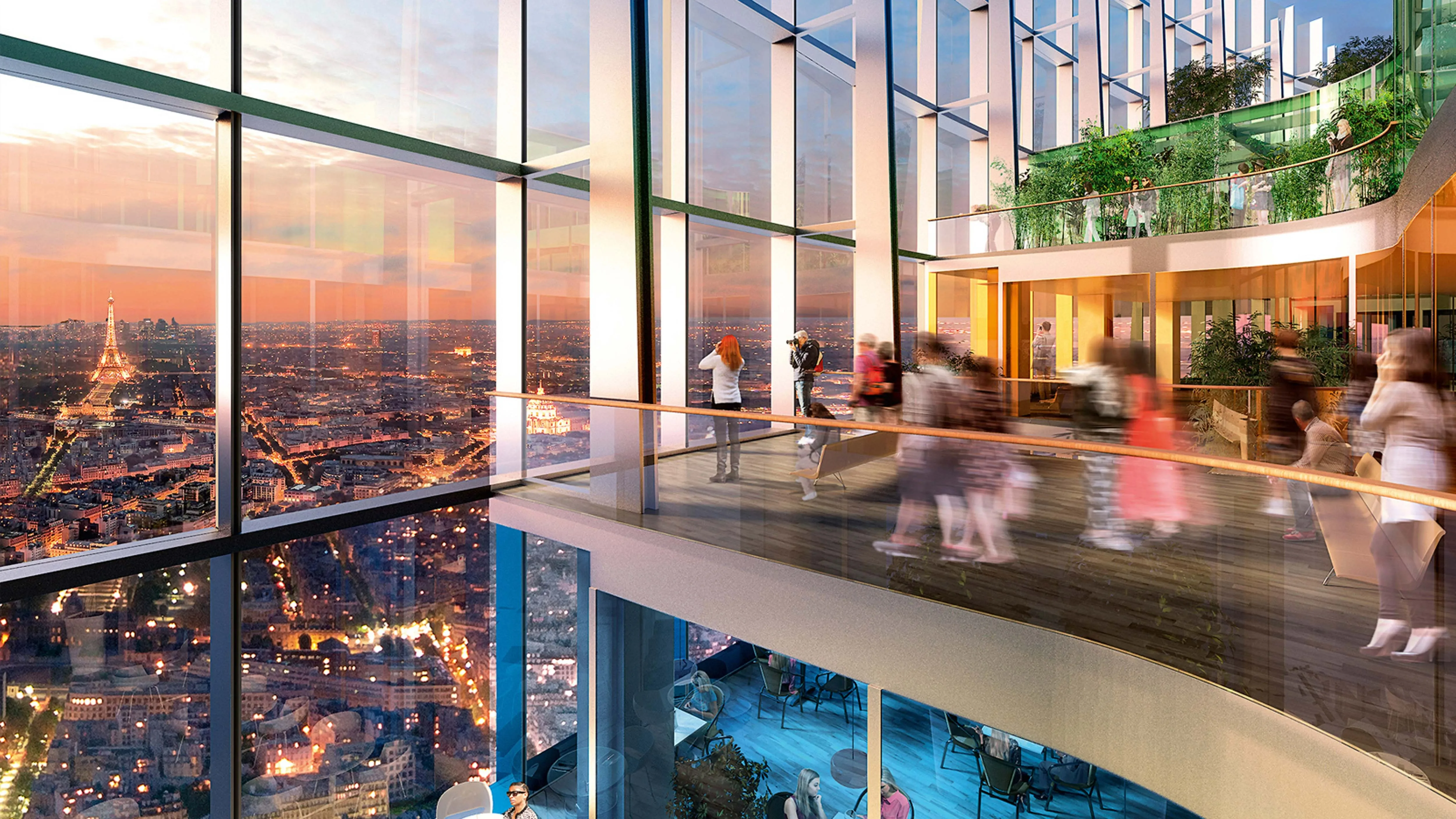
Inside, offices filled most of the floors, but from early on, the top levels were set aside for an observation deck and public spaces. The choice was symbolic: the very building that had reshaped the city’s skyline would also offer a vantage point from which Parisians and visitors could rediscover that skyline in full. When you take the lift today, you are following the same vertical route that office workers once used daily—only instead of heading to meetings, you step out into a calm gallery bathed in light, dedicated entirely to the pleasure of looking.
Architecture, height & the Paris skyline
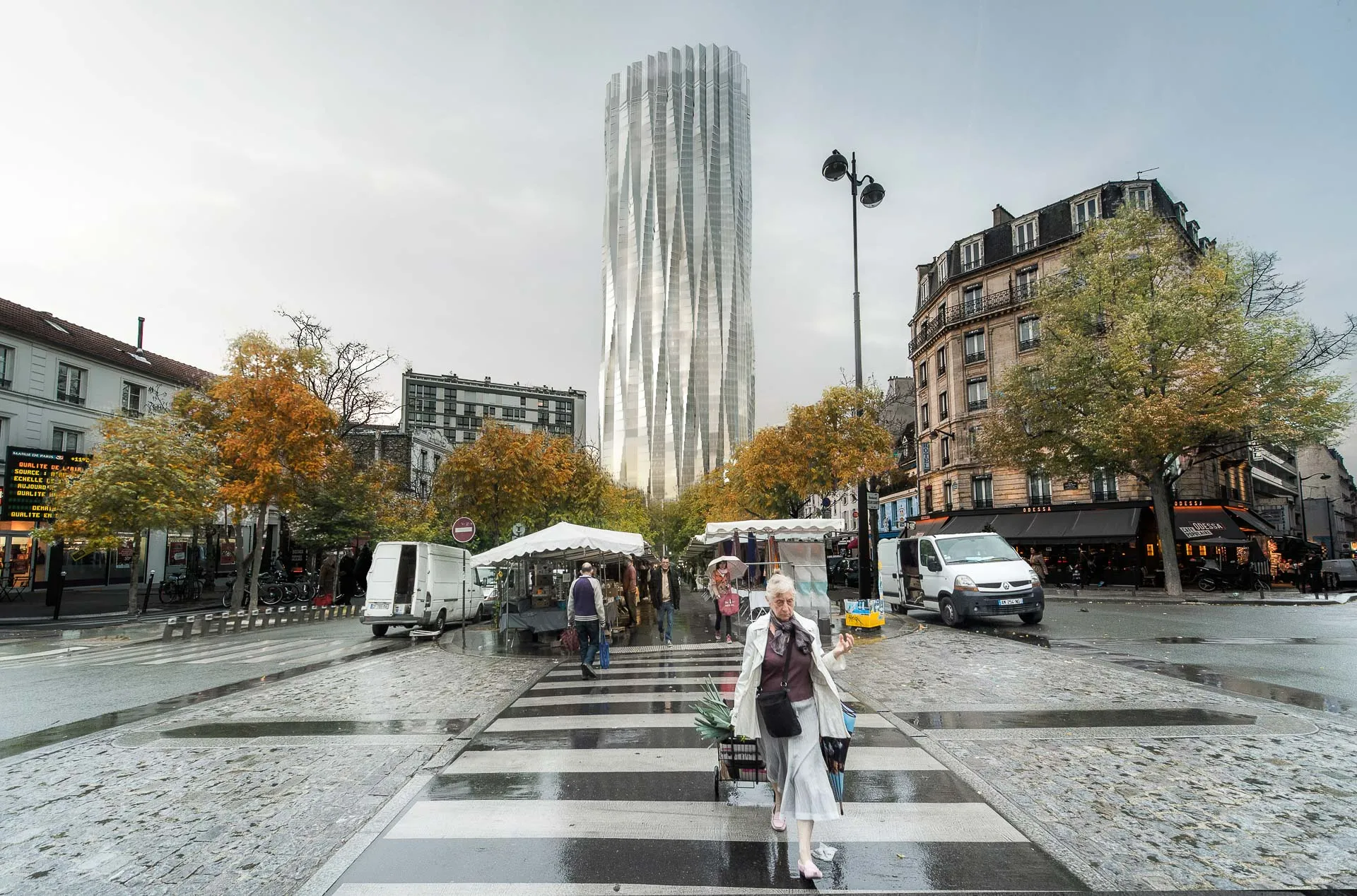
From street level, Tour Montparnasse can seem almost austere: a single, dark rectangle set against softer stone buildings. Seen from inside, however, its very height becomes a gift. At around 210 meters, the tower is tall enough to stand above almost every other structure in Paris, yet not so high that the city loses its texture. From the 56th floor and rooftop terrace, you can still pick out individual chimneys, tree‑lined boulevards, and the gentle curve of Haussmannian façades.
Architecturally, the tower is a child of its time—modernist, practical, and designed to maximize office space. But over the decades, its most admired feature has become the one that was easiest to overlook on paper: the view. When you turn slowly around the deck, you see how carefully Paris is organized, radiating outward from islands in the Seine, punctuated by domes and spires. The glass envelope that once divided opinion now serves as a discreet frame for the panorama it reveals.
A controversial tower that Parisians learned to love
When Tour Montparnasse first took its place in the skyline, public opinion was sharply divided. Many Parisians felt that such a tall, dark building clashed with the city’s classical profile. Debates in newspapers and cafés were passionate, and the tower even helped inspire stricter height limits in the historic center—rules that still protect Paris from uncontrolled vertical growth today.
Over time, however, something curious happened. While some residents continued to criticize the way the tower looks from the ground, more and more people began to appreciate what it offers from the top. Couples chose it for first dates with a view, families brought visiting relatives to show them ‘their’ Paris, and photographers climbed up at dawn or dusk in search of the perfect shot. Slowly, Tour Montparnasse became a familiar companion: not always loved for its shape, perhaps, but cherished for the experiences and memories it hosts.
What you see from the top
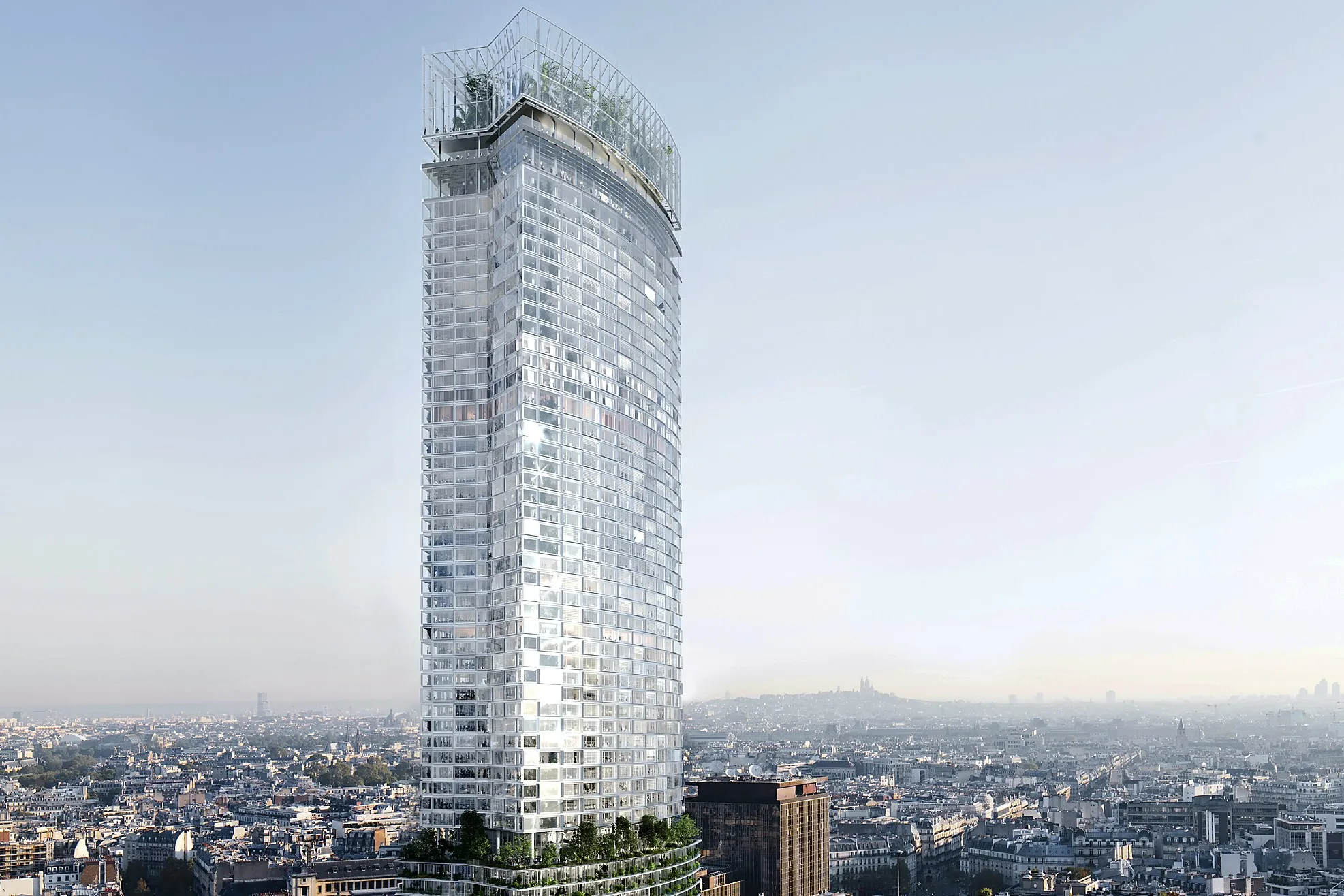
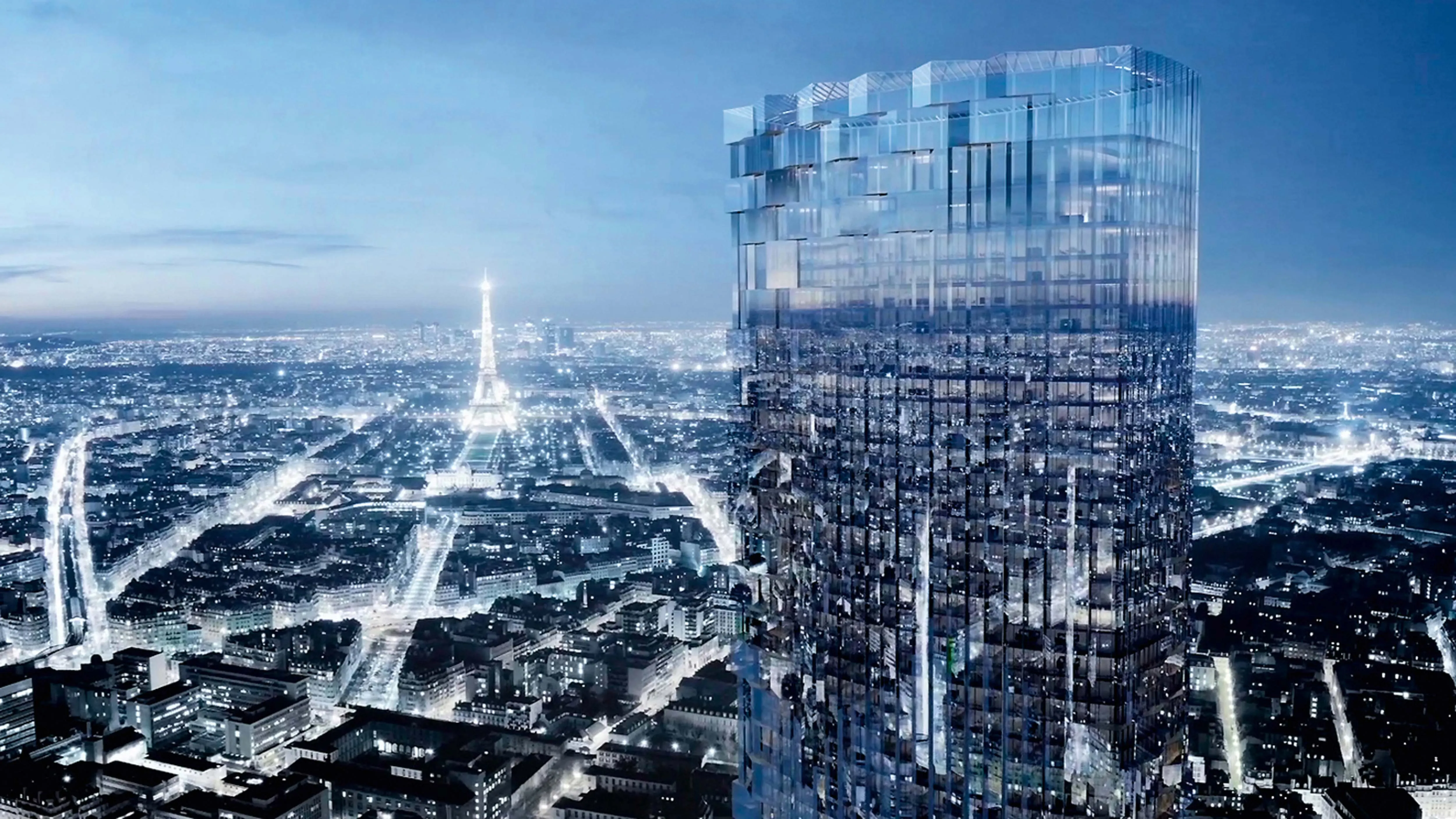
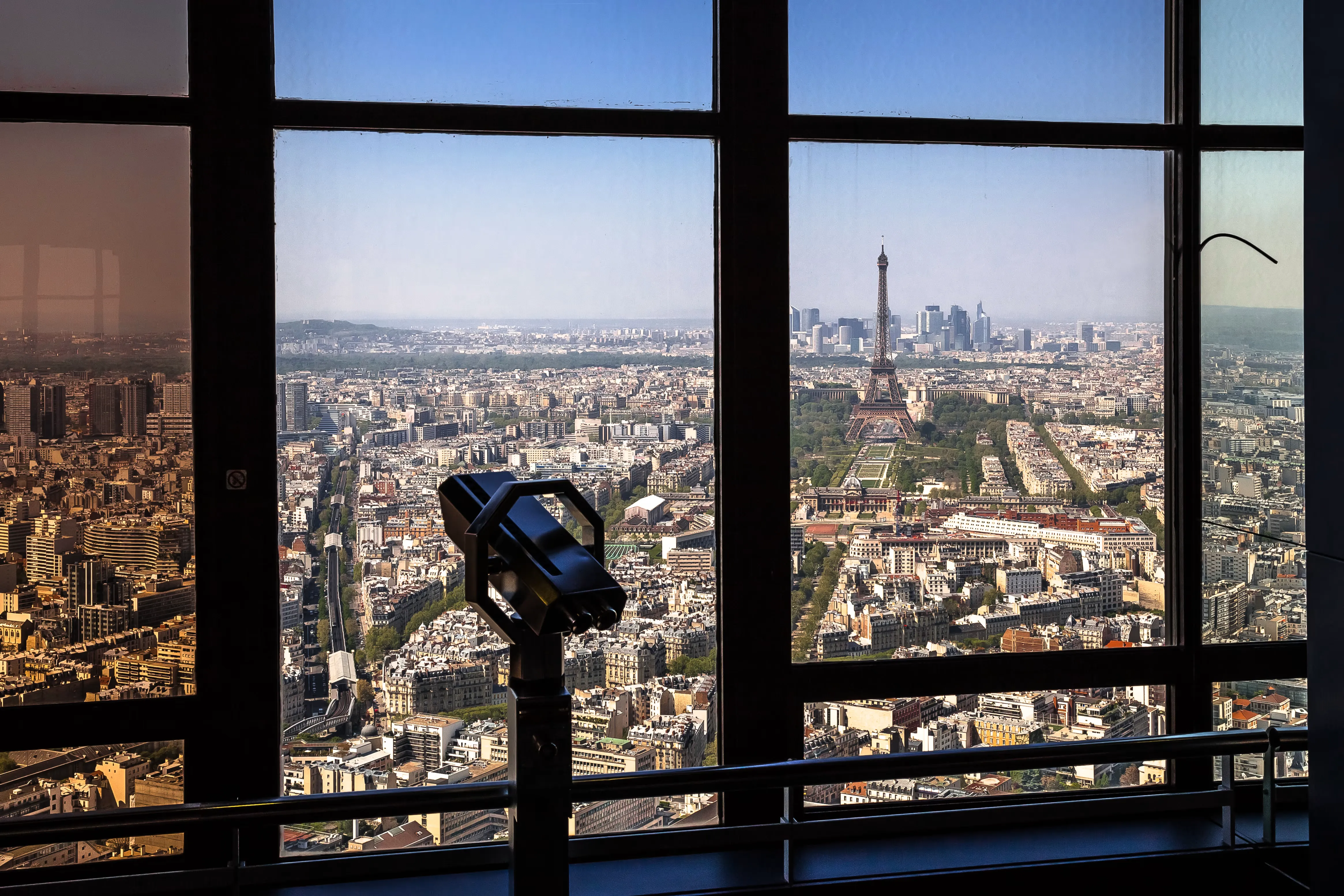
Standing at the windows, you can trace Paris like a living map. To the northwest, the Eiffel Tower rises gracefully above the Champ de Mars, its iron lattice glowing at night. Follow the Seine upstream and downstream and you’ll spot famous bridges, the Île de la Cité with Notre‑Dame’s silhouette, and the Louvre stretching along the riverbank. To the north, the white domes of the Sacré‑Cœur crown the hill of Montmartre, while to the west, the glass and steel towers of La Défense mark the city’s modern business district.
Turn toward the south and east, and the pattern shifts into quieter residential streets, parks, and clusters of trees that reveal just how green Paris can be. The golden dome of Les Invalides, the Jardin du Luxembourg, and the Panthéon line up in unexpected ways from this angle. On a clear day, your gaze stretches beyond the périphérique ring road to the outer suburbs and even, faintly, to distant hills. Each visit offers slightly different details: changing weather, new building projects, a temporary fairground on the horizon—proof that the panorama is never exactly the same twice.
Montparnasse yesterday and today
The district at the foot of the tower has a history of its own. In the early 20th century, Montparnasse was a magnet for artists, writers, and dreamers from around the world. Modigliani, Picasso, Hemingway, and many others passed through its cafés and studios. Even though much has changed, echoes of that creative era still linger in street names, small galleries, and the occasional old brasserie filled with mirrors and stained glass.
Today, Montparnasse is a blend of everyday Paris and travel hub. Office workers cross paths with students, families, and visitors rolling suitcases to and from the station. Shopping centers, cinemas, and theatres cluster around the square, while quieter residential streets unfold just a few minutes’ walk away. Watching all this movement from the summit of the tower, you understand that the view is not only about monuments; it is about the flows of people and stories that tie the city together.
Sunsets, night lights & changing seasons
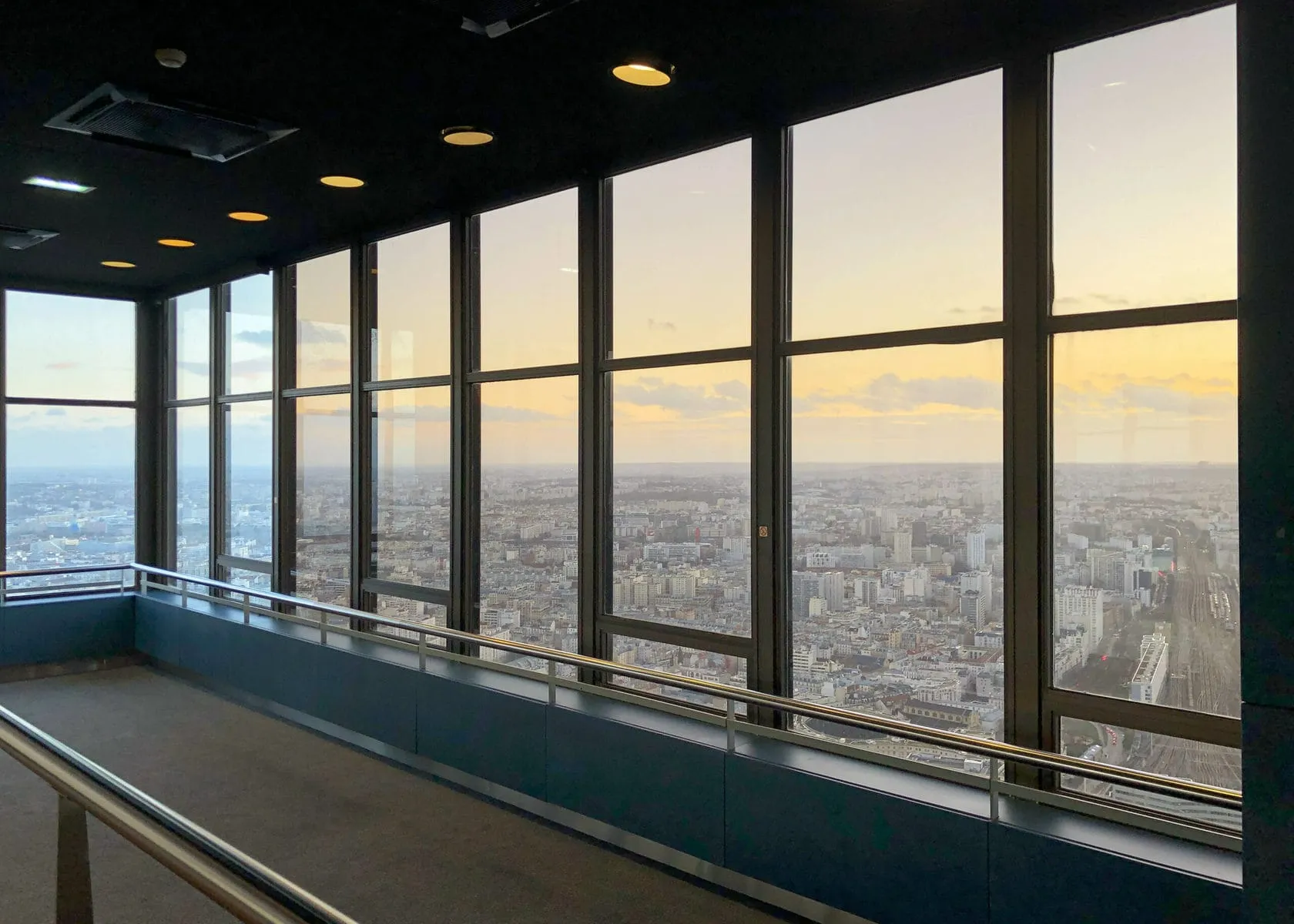
One of the reasons Tour Montparnasse is so beloved is that it lets you experience Paris at different hours and in different moods. In summer, late evenings bring long, radiant sunsets where the sky slowly fades from blue to soft pink while the city below hums with activity. In winter, the sun sets earlier, but the contrast between the warm lights indoors and the crisp air outside on the terrace can feel wonderfully atmospheric.
Night visits have their own magic. As the sky darkens, countless windows, street lamps, and car headlights create a gentle glow that seems to pool in the deeper streets and flare along the main boulevards. Every hour on the hour after nightfall, the Eiffel Tower erupts in a short burst of sparkling lights. From Tour Montparnasse, you can watch this spectacle from a perfect distance—close enough to feel involved, far enough to see it against the wider canvas of the city.
Safety, comfort & accessibility above the city
Visiting a tower this tall naturally raises questions about safety and comfort. The observation deck is designed with high barriers, secure railings, and clearly marked paths. Staff are present to guide visitors, answer questions, and ensure that the flow toward the lifts and rooftop remains smooth. Regular maintenance and modern safety standards help keep the experience reassuring even for those who are a little nervous about heights.
Accessibility has also been a growing focus. Lifts take you to the indoor deck without stairs, and wide corridors allow wheelchairs and strollers to move around most of the floor. The rooftop terrace may include some steps and uneven sections, but viewing points are designed so that you do not need to lean or stretch dangerously to enjoy the panorama. If you or someone in your group has specific mobility needs, it is worth checking the latest detailed information before you visit.
Culture, cinema & stories set in the tower
A building as visible as Tour Montparnasse naturally finds its way into culture. Over the years, it has appeared in films, television series, and countless novels and travelogues that use its height as a metaphor for distance, reflection, or escape. Some thrillers have even imagined dramatic scenes unfolding inside its lifts and offices, playing with the tension between ordinary work life and the vertiginous drop just beyond the walls.
Around the base of the tower, cinemas and theatres continue Montparnasse’s artistic tradition. Many visitors pair an evening visit to the observation deck with a film, a play, or a simple café stop, turning a single ticket into a full night out. As you look down from above, it is easy to imagine the many small stories playing out behind each cluster of lights—concerts beginning, friends meeting after work, chefs plating dishes in the restaurants below.
Tickets, queues & smart planning
A little planning goes a long way toward making your visit smooth. Because many people aim for the same popular times—particularly around sunset—choosing a time slot in advance helps you avoid unnecessary waiting. It is also useful to decide what kind of experience you want: a quick panoramic stop before dinner, a long, slow visit where you watch the light change, or a night‑time outing focused on the city’s lights.
If you are exploring Paris with a tight schedule, consider combining Tour Montparnasse with other activities in the same area, such as a walk through the Luxembourg Gardens or an evening in Saint‑Germain‑des‑Prés. If you have more time, you might simply let the visit unfold without rushing. Either way, checking ticket conditions, included services, and opening hours ahead of time will help you enjoy the tower itself instead of queuing or worrying about logistics.
Renovation and the future of the tower
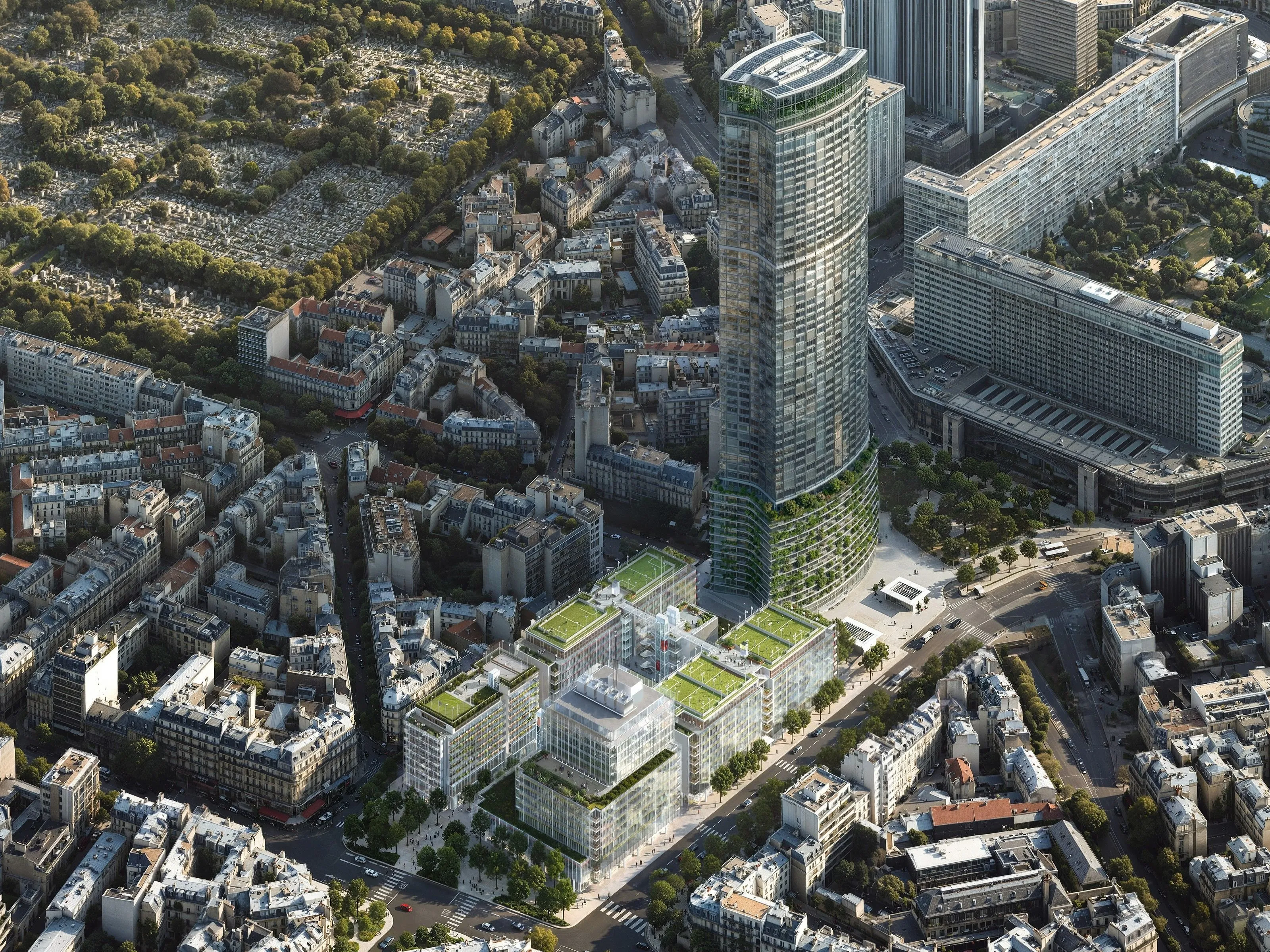
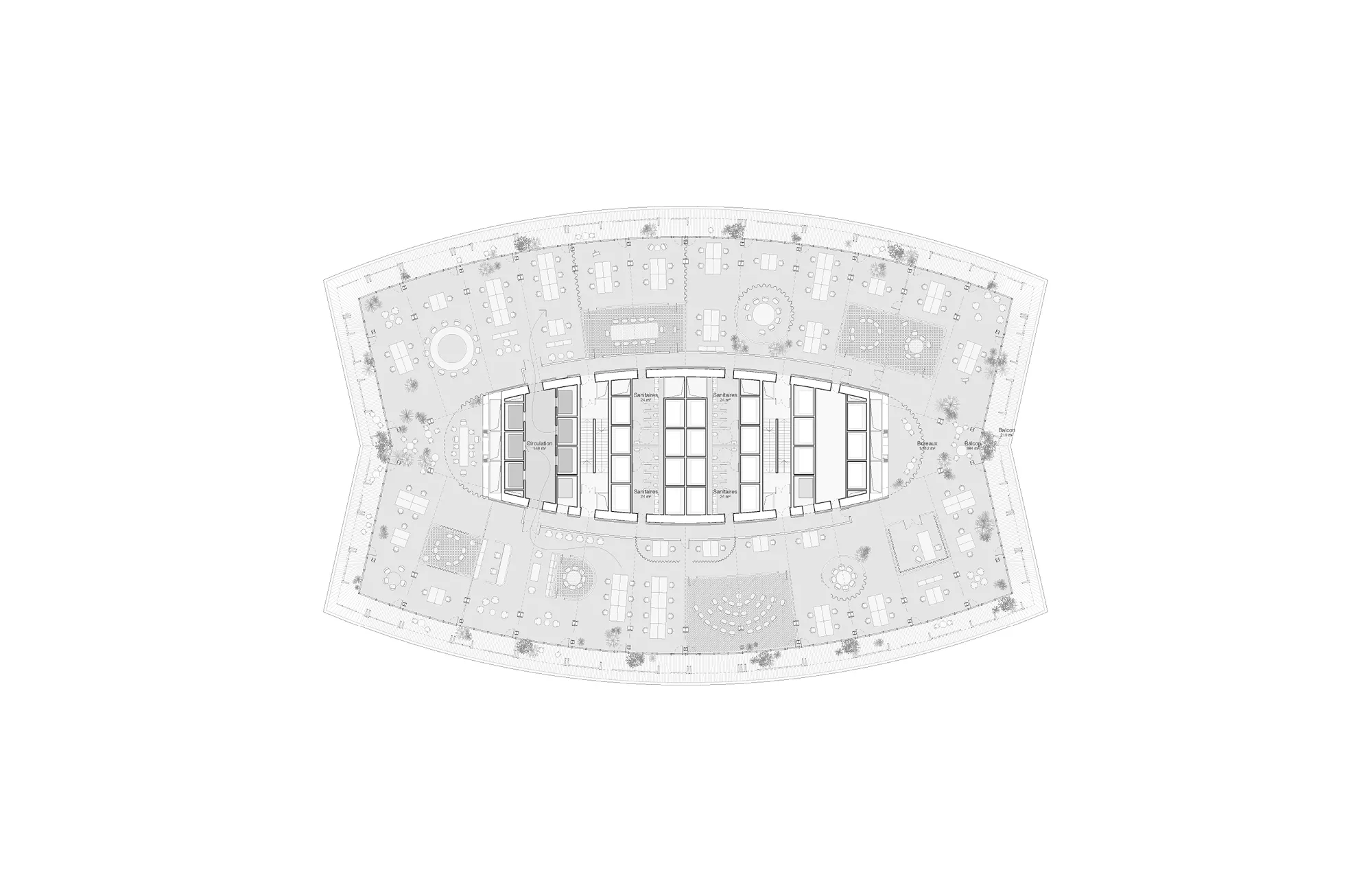
Like many buildings from its era, Tour Montparnasse has been undergoing a gradual transformation. Modernization projects aim to improve energy performance, refresh the façade, and adapt interior spaces to new ways of working and visiting. These changes are part of a broader effort to keep the tower relevant in a city that is constantly reimagining itself while still preserving its character.
For visitors, this means that some areas may evolve over time, but the essence of the experience remains the same: a fast ride upward, a moment of surprise as Paris appears all around you, and a chance to reflect on how a single building can start conversations about architecture, urban planning, and the way we want our cities to look in the future.
Walks, cafés & Left Bank discoveries nearby
Once you descend from the observation deck, you are perfectly placed to explore more of the Left Bank. A short walk brings you to classic Parisian cafés where artists and writers once lingered over coffee, or to quieter side streets lined with bookshops and local bakeries. Head north and you will eventually reach the Jardin du Luxembourg, one of the city’s most beloved parks, with its statues, fountains, and rows of green chairs.
Alternatively, wander south and east into more residential neighborhoods, where everyday Paris plays out far from the main tourist circuits. Here, small squares, community gardens, and local markets reveal another side to the city—one that is easy to miss if you only ever look up at monuments. Combining a visit to the tower with a slow walk through these streets is a simple way to balance grand panoramas with small, intimate details.
Why this view feels uniquely Parisian
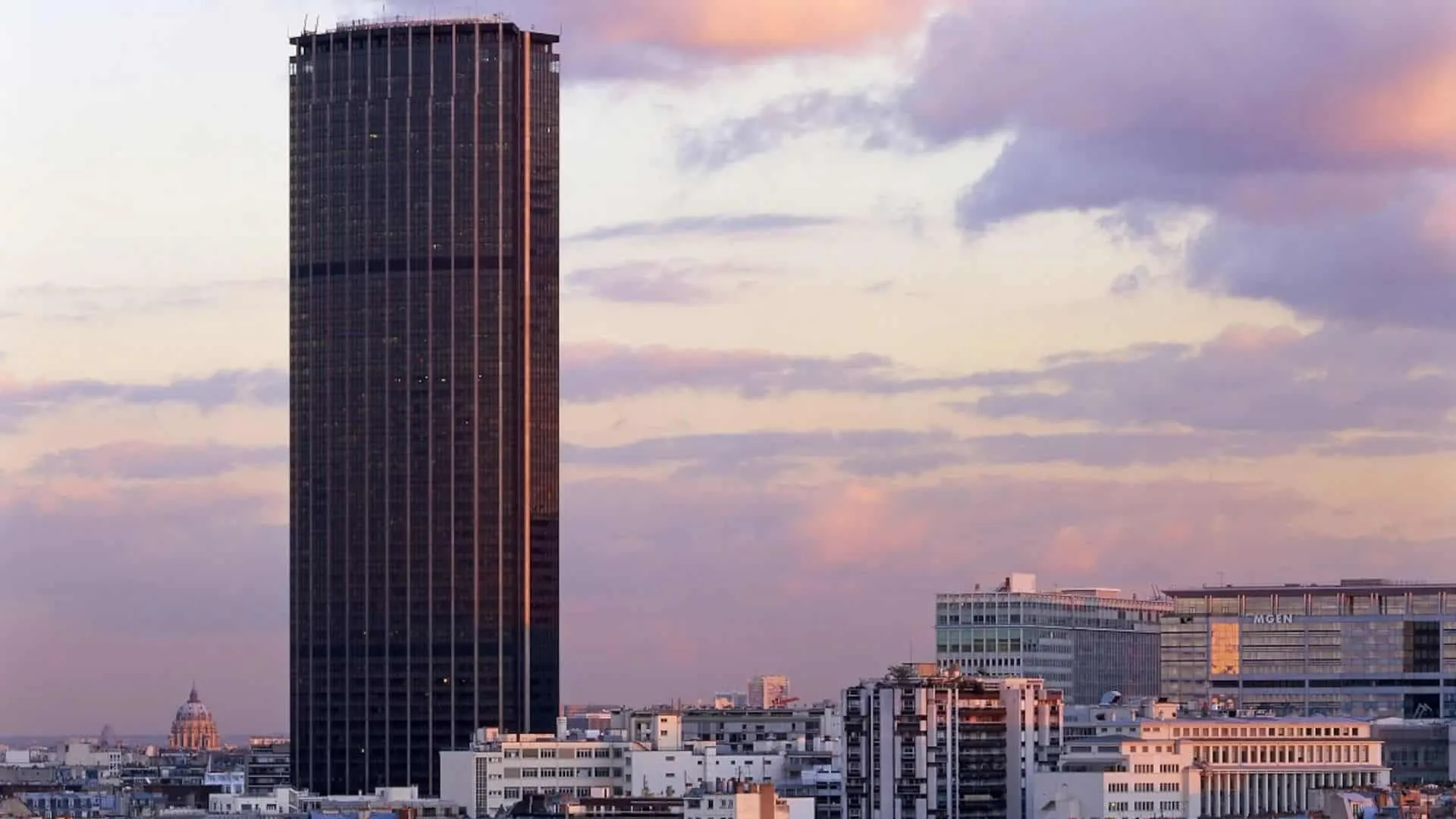
On paper, an observation deck is a practical attraction: a platform, some windows, a lift to carry people up and down. In reality, the experience at Tour Montparnasse is surprisingly moving. Part of the magic comes from the way the tower stands slightly apart from the historic core, offering you a view that includes almost everything, yet still feels connected to the streets below.
By the time you leave, your mental map of Paris will have changed. Neighborhoods that once felt far apart—Montmartre and the Latin Quarter, La Défense and the Eiffel Tower—now align in your memory as points in a single, continuous landscape. The rhythm of lifts, footsteps on the terrace, and distant traffic becomes a kind of quiet soundtrack to the city’s heartbeat. In that sense, a simple ticket to the top of Tour Montparnasse is more than a photo opportunity; it is a chance to understand Paris as a whole, in one sweeping, unforgettable glance.
Table of Contents
From old rail yards to a new skyline
Long before lifts whisked visitors to the top, the ground beneath Tour Montparnasse was a busy world of tracks, warehouses, and steam. For decades, Gare Montparnasse was one of the city’s great railway gateways, its surrounding yards filled with carriages and locomotives that linked Paris to the west of France and the Atlantic coast. After the Second World War, as rail transport evolved and the city grew, planners began to imagine something radically different for this area: a new business district and modern landmark that would signal a confident, forward‑looking capital.
In the 1960s and early 1970s, that vision took shape in the form of a dark, minimalist tower rising 210 meters above the Left Bank. At the time it was completed, Tour Montparnasse was the tallest skyscraper in France, and one of the tallest in Europe. For Parisians used to church spires and low stone buildings, its silhouette marked a dramatic change. Today, when you stand on its viewing platforms, you can still sense that break with the past: the tower stands alone, slightly apart, giving you the feeling of being at the edge of the old city and the beginning of something new.
Designing and building Tour Montparnasse
The idea of building a skyscraper above a major railway hub was ambitious. Architects and engineers had to reconcile two worlds: the invisible complexity of tracks and platforms below, and the desire for a sleek, vertical landmark above. Construction began in the late 1960s, with teams working to create deep foundations around live rail lines while traffic continued to flow in and out of Gare Montparnasse. In 1973, the tower opened, its reflective glass façade and dark metal frame instantly recognizable from many parts of the city.
Inside, offices filled most of the floors, but from early on, the top levels were set aside for an observation deck and public spaces. The choice was symbolic: the very building that had reshaped the city’s skyline would also offer a vantage point from which Parisians and visitors could rediscover that skyline in full. When you take the lift today, you are following the same vertical route that office workers once used daily—only instead of heading to meetings, you step out into a calm gallery bathed in light, dedicated entirely to the pleasure of looking.
Architecture, height & the Paris skyline
From street level, Tour Montparnasse can seem almost austere: a single, dark rectangle set against softer stone buildings. Seen from inside, however, its very height becomes a gift. At around 210 meters, the tower is tall enough to stand above almost every other structure in Paris, yet not so high that the city loses its texture. From the 56th floor and rooftop terrace, you can still pick out individual chimneys, tree‑lined boulevards, and the gentle curve of Haussmannian façades.
Architecturally, the tower is a child of its time—modernist, practical, and designed to maximize office space. But over the decades, its most admired feature has become the one that was easiest to overlook on paper: the view. When you turn slowly around the deck, you see how carefully Paris is organized, radiating outward from islands in the Seine, punctuated by domes and spires. The glass envelope that once divided opinion now serves as a discreet frame for the panorama it reveals.
A controversial tower that Parisians learned to love
When Tour Montparnasse first took its place in the skyline, public opinion was sharply divided. Many Parisians felt that such a tall, dark building clashed with the city’s classical profile. Debates in newspapers and cafés were passionate, and the tower even helped inspire stricter height limits in the historic center—rules that still protect Paris from uncontrolled vertical growth today.
Over time, however, something curious happened. While some residents continued to criticize the way the tower looks from the ground, more and more people began to appreciate what it offers from the top. Couples chose it for first dates with a view, families brought visiting relatives to show them ‘their’ Paris, and photographers climbed up at dawn or dusk in search of the perfect shot. Slowly, Tour Montparnasse became a familiar companion: not always loved for its shape, perhaps, but cherished for the experiences and memories it hosts.
What you see from the top
Standing at the windows, you can trace Paris like a living map. To the northwest, the Eiffel Tower rises gracefully above the Champ de Mars, its iron lattice glowing at night. Follow the Seine upstream and downstream and you’ll spot famous bridges, the Île de la Cité with Notre‑Dame’s silhouette, and the Louvre stretching along the riverbank. To the north, the white domes of the Sacré‑Cœur crown the hill of Montmartre, while to the west, the glass and steel towers of La Défense mark the city’s modern business district.
Turn toward the south and east, and the pattern shifts into quieter residential streets, parks, and clusters of trees that reveal just how green Paris can be. The golden dome of Les Invalides, the Jardin du Luxembourg, and the Panthéon line up in unexpected ways from this angle. On a clear day, your gaze stretches beyond the périphérique ring road to the outer suburbs and even, faintly, to distant hills. Each visit offers slightly different details: changing weather, new building projects, a temporary fairground on the horizon—proof that the panorama is never exactly the same twice.
Montparnasse yesterday and today
The district at the foot of the tower has a history of its own. In the early 20th century, Montparnasse was a magnet for artists, writers, and dreamers from around the world. Modigliani, Picasso, Hemingway, and many others passed through its cafés and studios. Even though much has changed, echoes of that creative era still linger in street names, small galleries, and the occasional old brasserie filled with mirrors and stained glass.
Today, Montparnasse is a blend of everyday Paris and travel hub. Office workers cross paths with students, families, and visitors rolling suitcases to and from the station. Shopping centers, cinemas, and theatres cluster around the square, while quieter residential streets unfold just a few minutes’ walk away. Watching all this movement from the summit of the tower, you understand that the view is not only about monuments; it is about the flows of people and stories that tie the city together.
Sunsets, night lights & changing seasons
One of the reasons Tour Montparnasse is so beloved is that it lets you experience Paris at different hours and in different moods. In summer, late evenings bring long, radiant sunsets where the sky slowly fades from blue to soft pink while the city below hums with activity. In winter, the sun sets earlier, but the contrast between the warm lights indoors and the crisp air outside on the terrace can feel wonderfully atmospheric.
Night visits have their own magic. As the sky darkens, countless windows, street lamps, and car headlights create a gentle glow that seems to pool in the deeper streets and flare along the main boulevards. Every hour on the hour after nightfall, the Eiffel Tower erupts in a short burst of sparkling lights. From Tour Montparnasse, you can watch this spectacle from a perfect distance—close enough to feel involved, far enough to see it against the wider canvas of the city.
Safety, comfort & accessibility above the city
Visiting a tower this tall naturally raises questions about safety and comfort. The observation deck is designed with high barriers, secure railings, and clearly marked paths. Staff are present to guide visitors, answer questions, and ensure that the flow toward the lifts and rooftop remains smooth. Regular maintenance and modern safety standards help keep the experience reassuring even for those who are a little nervous about heights.
Accessibility has also been a growing focus. Lifts take you to the indoor deck without stairs, and wide corridors allow wheelchairs and strollers to move around most of the floor. The rooftop terrace may include some steps and uneven sections, but viewing points are designed so that you do not need to lean or stretch dangerously to enjoy the panorama. If you or someone in your group has specific mobility needs, it is worth checking the latest detailed information before you visit.
Culture, cinema & stories set in the tower
A building as visible as Tour Montparnasse naturally finds its way into culture. Over the years, it has appeared in films, television series, and countless novels and travelogues that use its height as a metaphor for distance, reflection, or escape. Some thrillers have even imagined dramatic scenes unfolding inside its lifts and offices, playing with the tension between ordinary work life and the vertiginous drop just beyond the walls.
Around the base of the tower, cinemas and theatres continue Montparnasse’s artistic tradition. Many visitors pair an evening visit to the observation deck with a film, a play, or a simple café stop, turning a single ticket into a full night out. As you look down from above, it is easy to imagine the many small stories playing out behind each cluster of lights—concerts beginning, friends meeting after work, chefs plating dishes in the restaurants below.
Tickets, queues & smart planning
A little planning goes a long way toward making your visit smooth. Because many people aim for the same popular times—particularly around sunset—choosing a time slot in advance helps you avoid unnecessary waiting. It is also useful to decide what kind of experience you want: a quick panoramic stop before dinner, a long, slow visit where you watch the light change, or a night‑time outing focused on the city’s lights.
If you are exploring Paris with a tight schedule, consider combining Tour Montparnasse with other activities in the same area, such as a walk through the Luxembourg Gardens or an evening in Saint‑Germain‑des‑Prés. If you have more time, you might simply let the visit unfold without rushing. Either way, checking ticket conditions, included services, and opening hours ahead of time will help you enjoy the tower itself instead of queuing or worrying about logistics.
Renovation and the future of the tower
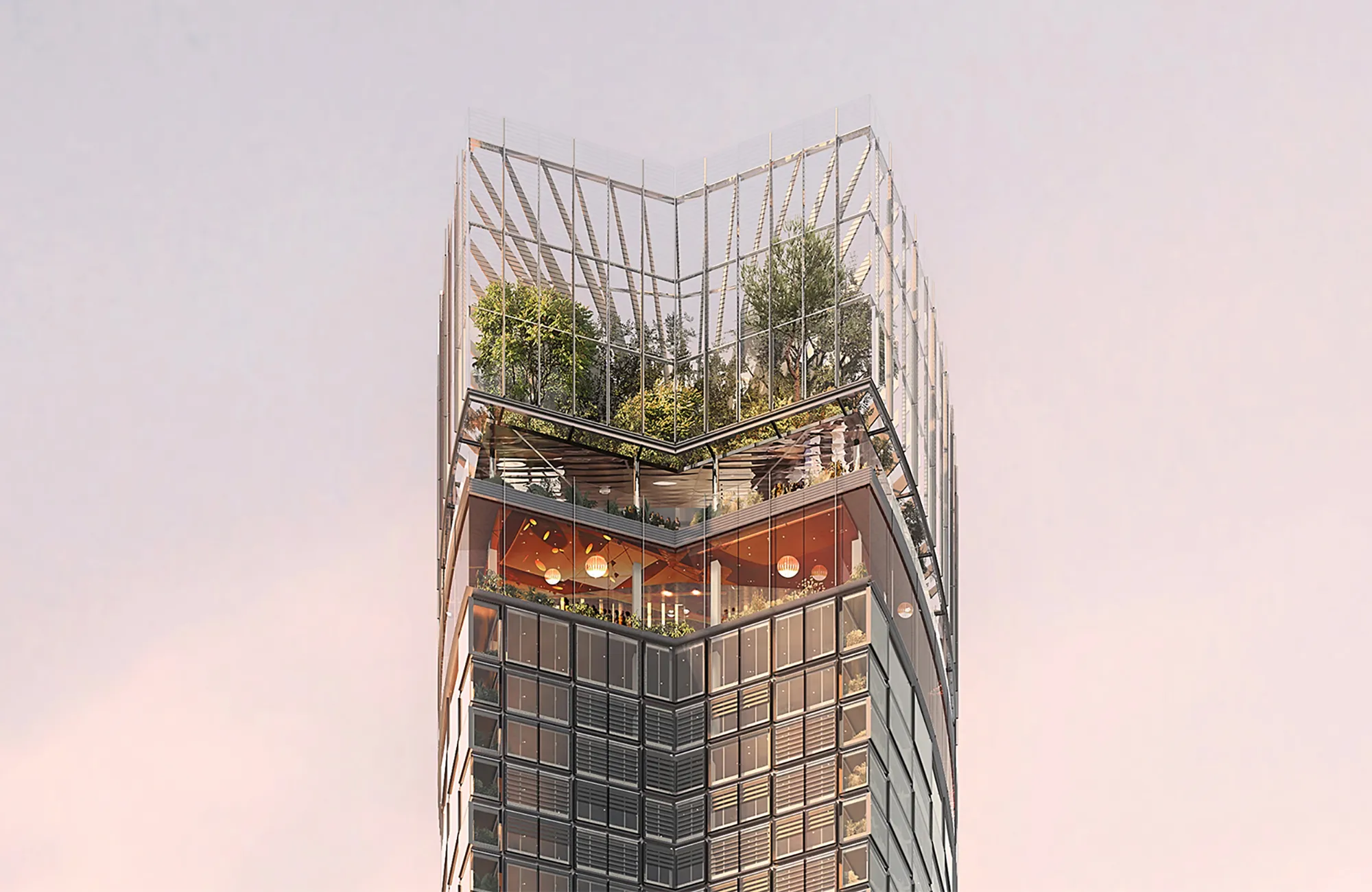
Like many buildings from its era, Tour Montparnasse has been undergoing a gradual transformation. Modernization projects aim to improve energy performance, refresh the façade, and adapt interior spaces to new ways of working and visiting. These changes are part of a broader effort to keep the tower relevant in a city that is constantly reimagining itself while still preserving its character.
For visitors, this means that some areas may evolve over time, but the essence of the experience remains the same: a fast ride upward, a moment of surprise as Paris appears all around you, and a chance to reflect on how a single building can start conversations about architecture, urban planning, and the way we want our cities to look in the future.
Walks, cafés & Left Bank discoveries nearby
Once you descend from the observation deck, you are perfectly placed to explore more of the Left Bank. A short walk brings you to classic Parisian cafés where artists and writers once lingered over coffee, or to quieter side streets lined with bookshops and local bakeries. Head north and you will eventually reach the Jardin du Luxembourg, one of the city’s most beloved parks, with its statues, fountains, and rows of green chairs.
Alternatively, wander south and east into more residential neighborhoods, where everyday Paris plays out far from the main tourist circuits. Here, small squares, community gardens, and local markets reveal another side to the city—one that is easy to miss if you only ever look up at monuments. Combining a visit to the tower with a slow walk through these streets is a simple way to balance grand panoramas with small, intimate details.
Why this view feels uniquely Parisian
On paper, an observation deck is a practical attraction: a platform, some windows, a lift to carry people up and down. In reality, the experience at Tour Montparnasse is surprisingly moving. Part of the magic comes from the way the tower stands slightly apart from the historic core, offering you a view that includes almost everything, yet still feels connected to the streets below.
By the time you leave, your mental map of Paris will have changed. Neighborhoods that once felt far apart—Montmartre and the Latin Quarter, La Défense and the Eiffel Tower—now align in your memory as points in a single, continuous landscape. The rhythm of lifts, footsteps on the terrace, and distant traffic becomes a kind of quiet soundtrack to the city’s heartbeat. In that sense, a simple ticket to the top of Tour Montparnasse is more than a photo opportunity; it is a chance to understand Paris as a whole, in one sweeping, unforgettable glance.